0878 567 491
 BG
BG 


 Proteins
 Amino acids
 Healthy supplements
 Vitamins and minerals
 Creatine
 Weight loss
 Nitrogen boosters
 Testosterone and growth hormone
 Bars and food
Healthy nails are not only an aesthetic detail, but also an important indicator of the overall health of the body. When they become dry, flaky, or easily brittle, it is usually a signal that the body needs specific care or replenishment of certain deficiencies.
Possible causes of brittleness
The problem is often complex and can be provoked by various external and internal factors:
- Lack of vitamins and minerals such as biotin (B7), iron, zinc or calcium is among the most common causes of structural weakness.
- Frequent contact with aggressive cleaning agents, nail polish removers with acetone, or low-quality gel polishes wear down the nail plate.
- Prolonged exposure to moisture or, conversely, excessively dry air in winter leads to a loss of elasticity.
- Thyroid dysfunction or hormonal imbalance often manifests itself through changes in the nails.
Methods for dealing with the problem
Recovery requires a combination of internal support and external protection:
- Intake of foods rich in protein and omega-3 fatty acids, as well as nutritional supplements that strengthen the root and nail plate.
- Hydration and nourishment with natural oils (such as almond or jojoba) in the nails prevents drying and delamination.
- Using rubber gloves when doing housework to limit contact with household chemicals.
- Proper shaping with metal files and maintaining nails at a moderate length to reduce mechanical stress on their free end.
Soft, splitting or brittle nails?
Although we often lump them together under the general name of “problem nails,” soft, splitting, and brittle nails signal completely different conditions in the body. Correctly recognizing the symptoms is the first step towards choosing an adequate and effective solution.
Soft nails
This condition is characterized by excessive flexibility of the nail plate, which bends easily, even with light pressure. The cause is often excessive exposure to moisture or harsh chemicals that “loosen” the keratin bonds. A deficiency in B vitamins or sulfur can also deprive the nail of its necessary structural density.
Split nails
Symptoms include horizontal delamination of the nail into separate layers, most often at its free end. This is usually a sign of dehydration of the nail beds or iron deficiency (anemia). Frequent nail polish application and the use of acetone nail polish removers further dry out the layers and provoke their separation from each other.
Brittle nails
Here the nails are hard but lose their elasticity and break vertically or crumble at the slightest impact. The main reason is the lack of natural oils and moisture, usually associated with age-related changes or hypothyroidism. In these cases, the keratin becomes too dry and brittle, which requires intensive nourishment, not just healing.
Vitamins for brittle nails – what we need to know
When they notice the first signs of splitting or brittleness, most people instinctively reach for nutritional supplements as the first and quickest measure. This approach has its undeniable advantages: it directly targets any deficiencies and provides the building blocks for the keratin that nails are made of. The results are often visible and long-lasting.
However, there are also disadvantages - indiscriminate intake without consultation can lead to an excess of certain substances, which burdens the liver. In addition, it may simply mask a more serious health problem that requires medical attention, not just vitamins.
Here are the most commonly used supplements and how to get the most out of their benefits.
Complex formulas “Hair, skin and nails”
These products are a balanced blend of minerals, vitamins and often contain collagen or MSM. They are usually taken with meals to avoid stomach irritation from the zinc they contain. A course of at least 3 months is required, as the nail plate is slowly renewed.
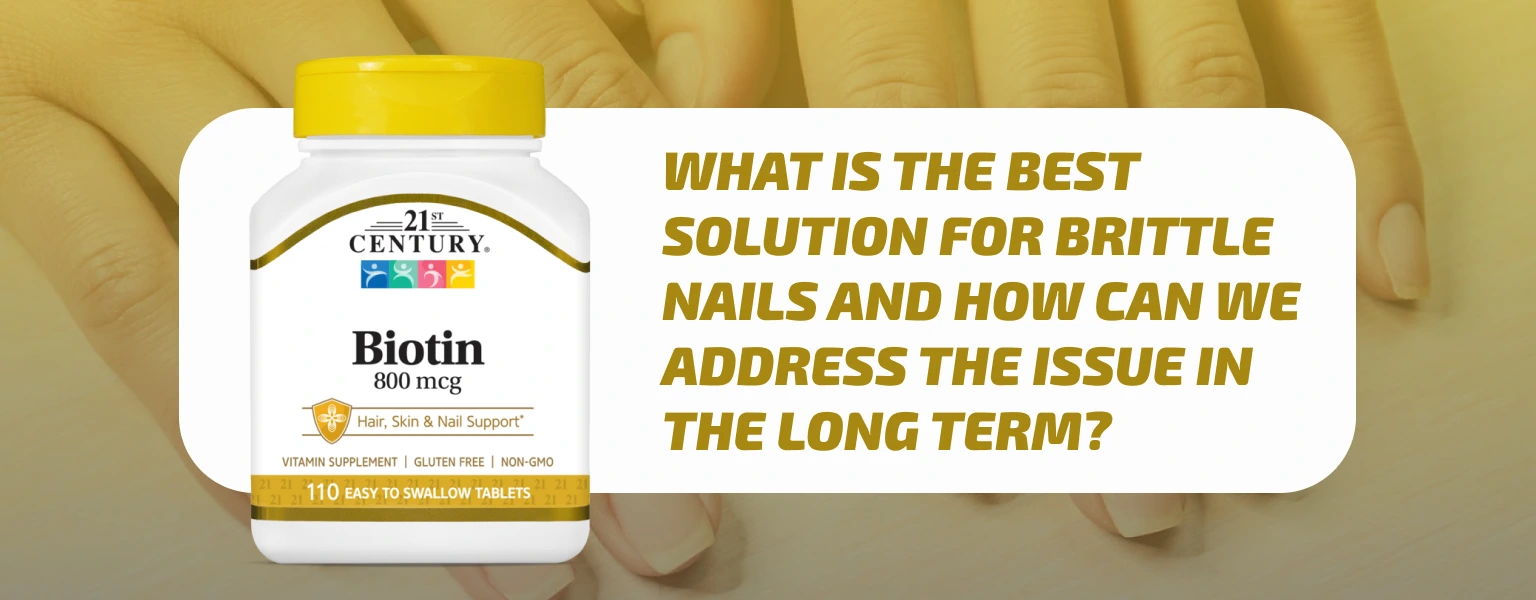
Biotin is the “gold standard” for healthy nails, as its action visibly improves the structure of keratin. It can be taken with or without food, but it is recommended to take it at the same time every day. It is important to stop taking it 3-5 days before blood tests, as it can affect thyroid indicators. Best results are observed after 4 to 6 months of regular use.
Zinc and iron
These minerals are critical if brittleness is accompanied by white spots (zinc deficiency) or pitting (iron deficiency). Iron is best absorbed on an empty stomach with a source of vitamin C (such as a glass of orange juice), while zinc should be taken after a meal to prevent nausea. Take them only after a proven deficiency has been tested, usually for a period of 2 to 3 months.
Omega-3 fatty acids
They nourish the nail bed and add elasticity, preventing dryness. Always take with the fattest meal of the day (e.g. lunch) to ensure maximum absorption. Can be taken long-term as part of a healthy regimen.
Nail nutrition – when it works and when it doesn't
External therapy is a key factor in maintaining nail strength, but its results directly depend on the current density and structure of the nail.
Oils and serums work by penetrating keratin for deep hydration while also building an invisible shield that blocks the loss of precious moisture.
The best results are obtained with small molecules that can penetrate deeper. Jojoba oil is closest to natural sebum and is an excellent cuticle softener. Almond oil and rice bran oil are rich in vitamin E, which prevents splitting. Products with keratin and panthenol temporarily “fill” microcracks, making the nail more resistant to breakage.
When does external care help? Topical therapy works great if the cause of brittleness is external – frequent hand washing, working with chemicals or dry air. Regularly rubbing oils into the matrix (the base of the nail) stimulates blood circulation and helps grow a more elastic and resistant nail plate.
But external nail care will not give lasting results if the problem is internal. In the presence of hormonal problems or serious nutrient deficiencies, the nail grows weak from the root. In these cases, oils only temporarily improve the appearance, but cannot “cure” the structure, since it is already compromised at the cellular level. External care is only half the solution.
Home care and prevention habits
Nail health starts with small changes in your daily routine that protect the keratin structure from microtrauma. The most important rule is to limit direct contact with water and aggressive detergents by regularly using household gloves. Prolonged exposure to water makes the nail plate porous and deprives it of its natural oils, which leads to inevitable brittleness.
Proper filing technique is also critical, always using a fine-grit file. Always file nails in one direction only to avoid splitting the ends.
Maintaining optimal hydration doesn't end with applying hand cream. It's important to rub a nourishing balm or pure natural oil into the base of the nail, where its living part is located, every day.
Do not use your nails as “tools” for opening or scraping, as this creates invisible cracks that later turn into serious fractures.
Finally, skip the polish for a few days a month. This will allow your nails to “breathe” and restore their natural protective film, which is vital for their long-term strength.
When should we see a doctor?
In many cases, nail problems are the result of improper care or minor nutritional deficiencies that are easily corrected at home. However, there are specific changes that should not be ignored, as they can be the first sign of a serious illness or infection.
- Color change – the appearance of dark spots or lines under the nail plate that do not disappear with growth, as well as yellowing or greening, often signals a fungal infection or other more serious disease.
- Nail deformities such as “hourglass” (convex) or “spoon” (concave) are usually a symptom of lung, heart, or anemia problems.
- Nail peeling (onycholysis) – if the nail plate begins to separate from the bed without mechanical trauma, this may be a sign of psoriasis or thyroid disease.
- Redness, pain, or the presence of pus around the cuticle are clear signs of a bacterial infection (paronychia) that requires antibiotic treatment.
- The appearance of horizontal indentations, known as Bo's lines, often occurs after a severe illness with a high fever or severe stress that has stopped nail growth.
Manicure and professional procedures – when do you need a break?
A professional manicure provides a flawless look, but prolonged use of certain techniques can thin the nail plate. Different types of procedures carry specific risks: classic gel polish requires aggressive matting of the surface, which, if repeated frequently, leads to sensitivity.
Acrylic, on the other hand, creates an extremely hard layer that prevents the natural nail from being flexible, making it susceptible to breaking under the coating. However, the greatest damage often comes not from the application itself, but from improper mechanical removal or excessive exposure to pure acetone, which literally „sucks“ moisture out of the keratin.
To maintain the health of your hands, it is advisable to take a break of at least 7-10 days every three months of continuous varnishing. During this period, nails should be treated with intensive hardeners containing calcium or silk proteins. Before the procedure, always require the application of a protective base, and after removing the varnish, focus on deep nourishment with oils. Good hydration of the cuticle between visits to the salon keeps the matrix alive and stimulates the growth of a healthier and more resistant new plate.
Foods for naturally healthy nails
The nail plate is made entirely of keratin and its structure is a direct reflection of metabolic processes and the availability of key vitamins and minerals in the blood. Here are the main food groups that we should focus on if we want to enjoy healthy, smooth and beautiful nails.
- Proteins (meat, eggs, legumes) – proteins supply the amino acids needed for keratin synthesis.
- Green leafy vegetables (spinach, kale) – are rich in iron and folic acid, which prevent brittleness and vertical lines.
- Nuts and seeds (almonds, pumpkin seeds) – sources of magnesium and zinc, which eliminate white spots and stimulate growth.
- Oily fish (Salmon) – omega-3 fatty acids hydrate the nail bed and add shine and elasticity.
- Orange vegetables (carrots, sweet potatoes) – the high content of vitamin A in their composition strengthens the structure and protects against drying.
The perfect manicure – patience and care
Achieving healthy and resilient nails is not a one-time act, but a long-term commitment to your own health. The best solution always lies in the balance between internal nourishment through quality food, vitamins and minerals, and external protection from aggressive environmental factors.
Remember that the nail plate is renewed slowly, so persistence is your strongest ally. Listen to your body's signals, give your hands the rest they need, and treat them with care. Beautiful nails are a sign of an organism that functions in complete harmony and health.